
01 Apr 2026 | Hidden Gems, Montréal
Old Montreal gets the photographs. What’s one street over gets the real city.
Montréal is one of the most photographed cities in Canada — and most of that photography happens in the same six locations. Old Port, Mount Royal, Notre-Dame Basilica, the Plateau staircases. Beautiful, all of them. Also exactly where everyone else is standing.
The hidden gems of Montréal are not difficult to find. They just require taking one street further than the tourist trail goes. Here are six that locals return to and most visitors miss entirely.
The Lachine Canal was the industrial artery of 19th-century Montréal — the waterway that powered the city’s manufacturing era and then fell into disuse when the St. Lawrence Seaway made it obsolete. Today it’s a 14.5km linear park connecting the Old Port to Lachine, flanked by cycling and walking paths, converted warehouses, independent cafes, and views that feel nothing like the postcard version of the city.
On a weekend morning in spring or summer, locals cycle the full length for breakfast at the far end and back. It’s free, entirely accessible, and one of the most genuinely Montréal experiences available.

- The Plateau’s Hidden Courtyards
The Plateau-Mont-Royal is famous for its exterior staircases — the wrought-iron and wood structures that climb the fronts of triplex buildings and define the neighbourhood’s visual identity. What’s less known: many of these buildings back onto shared interior courtyards that are, in warm months, some of the most private and beautiful outdoor spaces in the city.
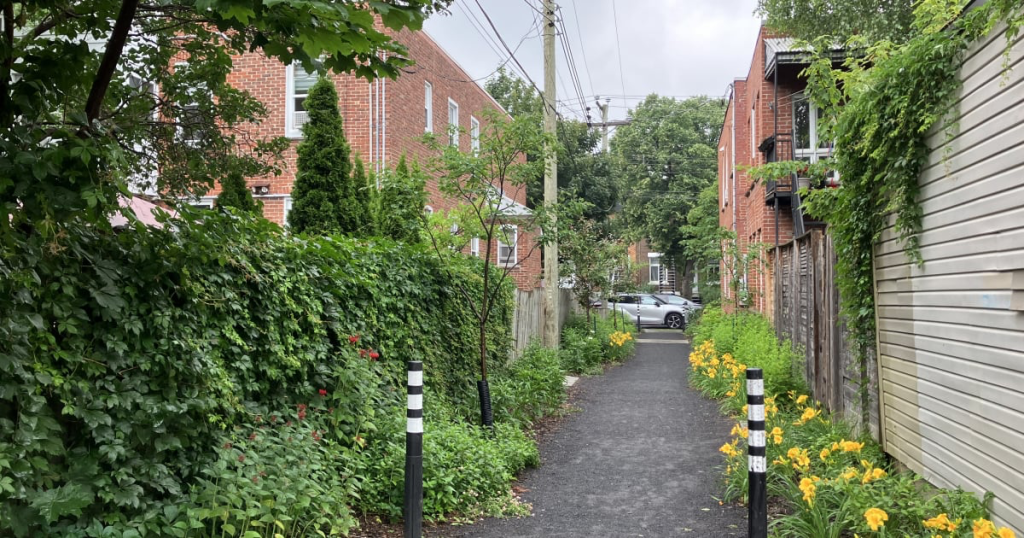
Walk the lanes that run behind the main streets — Rue de la Ruelle, the alley networks behind Rue Saint-Denis and Rue Drolet — and you’ll find a version of Montréal that operates completely out of tourist view. Slow down and look through the gates.
On Sainte-Catherine Street West, a nondescript building hides one of the densest concentrations of contemporary art studios and galleries in Canada. The Belgo Building houses over 20 galleries and artist studios across multiple floors, most of them free to enter, open to the public, and almost entirely unknown outside the city’s art community.
Thursday evenings see the most activity — openings, events, and studios with doors propped open. No ticket, no reservation. Just show up and take the elevator.

- Rue Wellington in Verdun
Verdun was for decades the working-class neighbourhood that Montréalers grew up in and moved away from when they could. In the past ten years it’s quietly become one of the most interesting streets in the city. Rue Wellington’s main strip has independent restaurants, natural wine bars, local cafes, and a neighbourhood energy that the Plateau had fifteen years ago before it became a destination.
It’s two metro stops past where most tourists go. That gap is exactly why it’s worth making.

While everyone is staring at the Notre-Dame Basilica, the oldest building in Montréal is sitting quietly just next door. The Grand Séminaire de Montréal dates to 1685 — built when the Sulpician order effectively owned and governed the entire island, and Montréal was a fur trading outpost surrounded by wilderness. Two original 17th-century stone towers still stand on the grounds, built partly as fortifications against Iroquois raids. The clock on the facade, installed in 1701, is the oldest public clock in North America and has been keeping time on this street for over 300 years.

Everyone climbs Mont-Royal. Almost everyone climbs the western side from the main chalet access path. The eastern side — accessed from Parc Avenue through the less-visited Olmsted Trail network — is quieter, wilder-feeling, and populated almost exclusively by locals who know the mountain well enough to find the view spots that aren’t marked on any tourist map.
Go in the early morning, bring coffee, and give yourself two hours with no particular route. The mountain reveals itself differently from this side.

The Montréal That Locals Actually Live In
These six places don’t compete with Notre-Dame or the Old Port for photographs. They compete for something harder to find: the feeling that you actually understand a place.
Montréal rewards the people who wander past the obvious. These are six places to start.
